Why Do I Wake Up at 3 a.m.? Hormones, Blood Sugar and the Bathroom Trip
You fall asleep fine. Then you are staring at the ceiling in the dark, wide awake, for no reason you can name. There usually is a reason, and for most people it comes down to one of three things. Here is what the research shows about each, and what to try tonight.
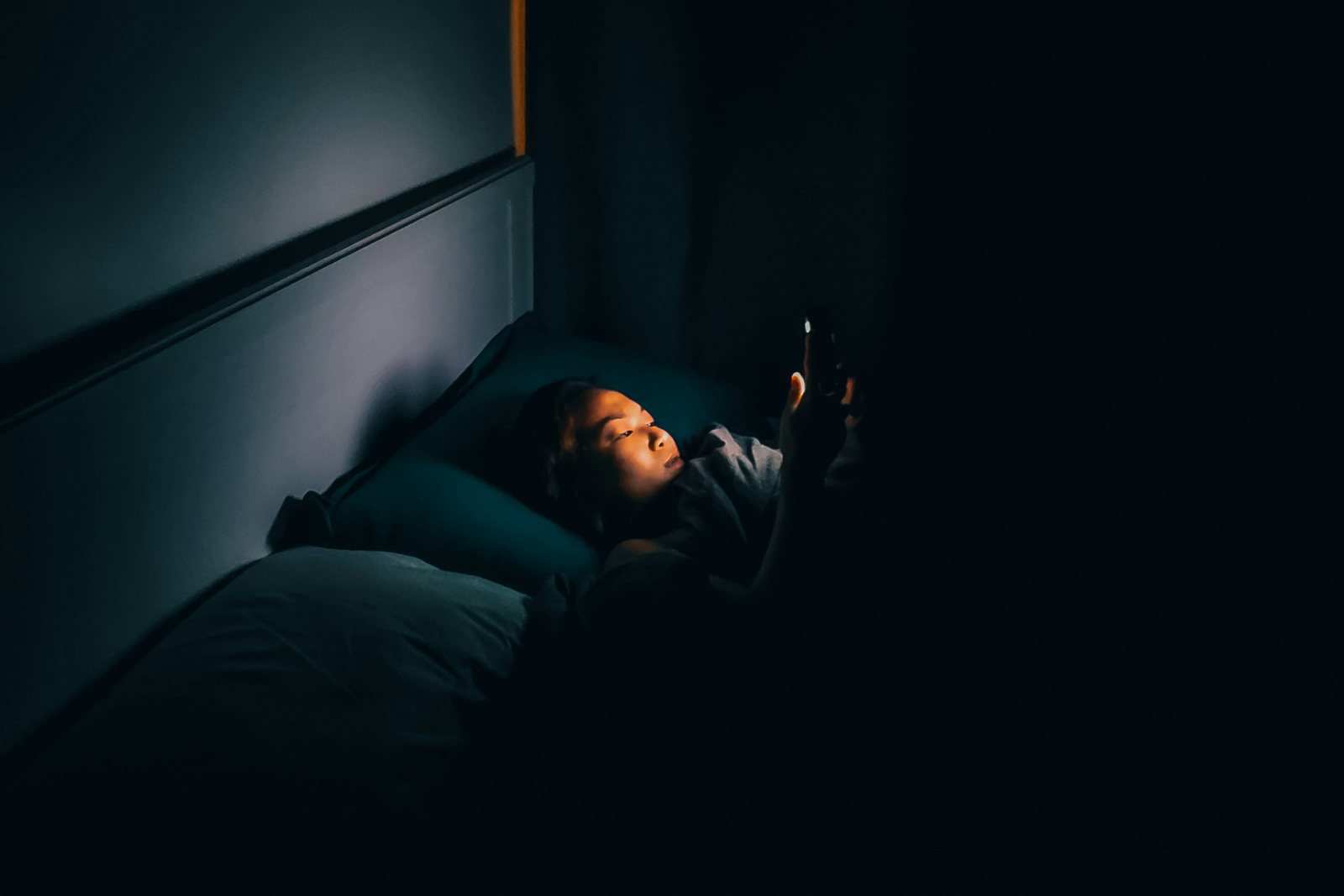
The 3 a.m. wake-up has been all over social media lately, and it comes up at the gym almost every week. Usually it sounds like this: "I fall asleep no problem. Then I am up at two or three, and I am just awake."
First, some reassurance. Everyone wakes up during the night. Sleep runs in cycles of roughly 90 minutes, and the second half of the night is lighter, with more time spent near the surface. Most brief awakenings are so short you never remember them. The problem is not waking up. It is waking up fully, with a busy brain and a racing heart, and not being able to get back down.
When that happens again and again, there are three common culprits worth looking at: your hormones, your fuel, and what you do in the first two minutes after you open your eyes.
1. It may be your hormones
If you are a woman somewhere between your late thirties and your mid-fifties, start here.
The best long-term data we have comes from SWAN, the Study of Women's Health Across the Nation, which has followed thousands of women through the menopause transition since the 1990s. In a 2011 review of the SWAN findings, Howard Kravitz and Hadine Joffe reported that waking up during the night was the most common sleep complaint, and that trouble falling and staying asleep became more common as women moved through perimenopause. Sleep difficulty was highest in late perimenopause and often stayed elevated after menopause.
Hot flashes and night sweats
The most obvious driver is the hot flash. In SWAN, the link between hot flashes and broken sleep was "dose-dependent": the more nights a woman had them, the more likely she was to report sleep problems.
A 2014 sleep-lab study by Massimiliano de Zambotti, Fiona Baker and colleagues at SRI International, published in Fertility and Sterility, measured this directly. They monitored 34 perimenopausal women overnight, using skin sensors to detect hot flashes objectively rather than relying on memory. The women averaged about 3.5 hot flashes a night, and roughly 69 percent of those hot flashes were linked to an awakening. Hot-flash-related waking made up about a quarter of all the time they spent awake at night.
Here is the interesting part: you do not always feel the flash. Many women wake up, feel a little warm or restless, and never connect it to a hot flash at all. If you kick the covers off at 3 a.m. and then lie there wide awake, that may be what happened.
The progesterone piece
Hot flashes are not the whole story, though. SWAN found sleep problems in perimenopause even in women without hot flashes.
One reason is progesterone. Progesterone is broken down into a compound called allopregnanolone, which acts on the same calming GABA receptors in the brain that many sleep medications target. In plain terms, progesterone has a gentle sedative effect. In perimenopause, cycles become irregular, ovulation is less consistent, and progesterone falls and swings. Sleep can get lighter and easier to break.
There is some trial evidence behind this. A 2021 systematic review and meta-analysis in the Journal of Clinical Endocrinology & Metabolism (Nolan, Liang and Cheung) pooled randomised trials of micronised progesterone and found it improved several sleep measures, mainly in postmenopausal women, including how quickly people fell asleep. The effects were modest and the studies were small and mixed, so this is not a magic fix. But it fits the picture.
2. It may be your fuel tank
This is the one that surprises people, and it applies to men and women.
Overnight you are fasting for eight hours or more, but your brain still needs a steady supply of glucose. Your liver handles that by slowly releasing its stored carbohydrate, called glycogen. Most nights this works without a hitch.
But if that store is running low, because you trained hard that day, you have been eating very low-carb, or you had an early, light dinner and nothing after, your blood sugar can drift downward in the early morning hours. Your body does not let that slide. It defends your blood sugar with stress hormones, mainly adrenaline and cortisol, which tell the liver to make and release more glucose. Those are the same hormones that get you up and going in the morning. Cortisol is already on its way up in the second half of the night, preparing you for waking, so a blood sugar dip at 2 or 3 a.m. adds fuel to a fire that is already starting.
What the lab study showed
The clearest evidence that falling blood sugar can wake you up comes from a 2007 study by Bernd Schultes, Jan Born and colleagues at the University of Lübeck, published in PLOS Medicine. They lowered blood sugar on purpose during sleep, using an insulin drip, in 16 healthy adults and 16 people with type 1 diabetes.
- 10 of the 16 healthy adults woke up when their blood sugar dropped. Nobody woke during the same window on the control night.
- In every person who woke, adrenaline started rising before they woke, by an average of about seven and a half minutes.
- Only 1 of the 16 people with type 1 diabetes woke, which is why night-time lows are so dangerous for them.
I want to be honest about the limits. This was a big, deliberate drop to a level most healthy people will never reach on an ordinary night. It does not prove that your 3 a.m. wake-up is a blood sugar problem. What it shows is the mechanism: your brain treats falling fuel as a reason to sound the alarm, and the alarm is adrenaline. If you tend to wake up wired, with a pounding heart or a sense of alertness out of nowhere, that pattern is worth noticing.
The alcohol trap
Alcohol deserves its own mention here. A 2013 review in Alcoholism: Clinical & Experimental Research (Ebrahim and colleagues) pulled together decades of sleep studies and found a consistent pattern: alcohol helps you fall asleep and deepens sleep in the first half of the night, then disrupts sleep in the second half. Alcohol also interferes with the liver's ability to release glucose. That glass of wine with dinner can set you up for exactly the 3 a.m. wake-up you are trying to avoid.
3. Feel the urge to pee, but don't really need to? Stay in bed
This is the one that has been trending, and there is real sense behind it.
Most of us assume the bladder woke us up. Sometimes it did. But sleep researchers have been questioning that for years. In a 2009 paper in Sleep Medicine, Donald Bliwise and colleagues looked at night-time urination and disturbed sleep in older adults and suggested that the bathroom trip may often be the result of waking, not the cause. You wake for some other reason (a hot flash, a noise, a blood sugar dip, a partner shifting), you become aware of your bladder, and you decide to get up. Earlier work they cite found that people could identify the cause of only a small fraction of their awakenings.
Why getting up keeps you up
Think about what happens when you get up. You go from lying flat to standing. Your heart rate jumps and your blood vessels tighten to keep blood flowing to your brain. You walk. You probably flip on a light, and light, even for a minute, tells the clock in your brain that it might be morning. By the time you are back in bed, you have gone from half-asleep to fully awake.
If you stay put, your heart rate and blood pressure stay level, your eyes stay in the dark, and you are still close to sleep. A mild urge often fades once you relax. Slow breathing, with a longer breath out than in, helps settle things.
The important caveat: if you truly need to go, go. Holding it all night is not the goal, and lying there uncomfortable will not get you back to sleep either. Keep the lights low (a dim night light in the hallway or bathroom is better than the overhead light), do not check your phone, and get back into bed.
When the bathroom trips are a signal
Getting up once in a while is common. Getting up two, three or more times a night, every night, is worth looking into. Research on nocturia (the medical term for waking to urinate) shows that bother climbs with each extra trip, and frequent night-time trips are linked to daytime fatigue and a higher risk of falls, especially as we get older.
One cause people rarely think of is sleep apnea. When your airway keeps closing during sleep, the strain on your heart triggers the release of a hormone called atrial natriuretic peptide, which tells your kidneys to dump more water and salt. A 2023 systematic review in Sleep Medicine Reviews (Di Bello and colleagues) found that treating sleep apnea with CPAP cut night-time bathroom trips by about half on average. If you snore, wake up gasping, or feel exhausted no matter how long you sleep, mention it to your doctor.
What to try tonight
Your 3 a.m. game plan
- Do not grab your phone. The light and the scrolling wake your brain right up. Checking the time also starts the "if I fall asleep now, I'll get four hours" math, which never helps.
- Mild urge? Stay in bed and breathe slowly for a few minutes first. If you still need to go, go, with the lights low.
- Try a small bedtime snack if you train hard, eat low-carb, or eat dinner early. Some protein with a slow carb an hour or two before bed: Greek yogurt with berries, an apple with nut butter, or cottage cheese with a few whole-grain crackers.
- Keep the bedroom cool and use layers you can kick off. This matters even more if hot flashes are part of your picture.
- Watch the evening drink. Alcohol close to bed is one of the most reliable ways to break up the second half of the night.
- Front-load your fluids. Drink most of your water earlier in the day and taper off in the last couple of hours before bed.
- Get morning light. Daylight early in the day helps anchor your body clock so sleep pressure lines up with bedtime. I wrote about it in morning sunlight and your circadian rhythm.
When to talk to your doctor
Waking once and drifting back off is normal. Talk to your doctor if:
- You wake most nights and cannot get back to sleep, and it has gone on for weeks.
- You are up to urinate two or more times a night on a regular basis.
- You snore loudly, someone has noticed you stop breathing, or you wake up gasping.
- You wake with a racing heart, sweating or shakiness, especially if you have diabetes or take blood-sugar-lowering medication.
- Night sweats and hot flashes are wrecking your sleep. There are good options, and you do not have to just put up with it.
And if it has become chronic insomnia, know that the first-line treatment recommended by the American College of Physicians is not a pill. It is cognitive behavioural therapy for insomnia (CBT-I), a structured program that retrains how your brain relates to your bed and your sleep.
The honest summary
Waking up at 3 a.m. is not a character flaw, and it is not random. For a lot of women it is hormonal, tied to your age and where you are in your cycle or life stage. For others, it is a fuel problem, made worse by hard training, low-carb eating or a glass of wine. And for almost everyone, what you do in the first two minutes after you wake decides whether you are back asleep in ten minutes or up for an hour.
Stay in the dark. Stay in bed if you can. Feed yourself properly. And if the pattern does not budge, get it looked at.
Is perimenopause behind your 3 a.m. wake-ups?
Book a free supplement consult and we will look at your sleep, energy, cravings and training, and build a plan around what can help. Through October 31, you also get 10% off the vitamins from your protocol. Coaching happens at our private studio near the Yellowhead corner in Edmonton.
Book a consultationSources: Kravitz HM, Joffe H. Sleep during the perimenopause: a SWAN story. Obstetrics and Gynecology Clinics of North America, 2011. · de Zambotti M, Colrain IM, Javitz HS, Baker FC. Magnitude of the impact of hot flashes on sleep in perimenopausal women. Fertility and Sterility, 2014. · Nolan BJ, Liang B, Cheung AS. Efficacy of micronized progesterone for sleep: a systematic review and meta-analysis of randomized controlled trial data. Journal of Clinical Endocrinology & Metabolism, 2021. · Schultes B, et al. Defective awakening response to nocturnal hypoglycemia in patients with type 1 diabetes mellitus. PLOS Medicine, 2007. · Ebrahim IO, Shapiro CM, Williams AJ, Fenwick PB. Alcohol and sleep I: effects on normal sleep. Alcoholism: Clinical & Experimental Research, 2013. · Bliwise DL, et al. Nocturia and disturbed sleep in the elderly. Sleep Medicine, 2009. · Tikkinen KAO, et al. Nocturia frequency, bother, and quality of life: how often is too often? European Urology, 2010. · Di Bello F, et al. Nocturia and obstructive sleep apnea syndrome: a systematic review. Sleep Medicine Reviews, 2023. · Qaseem A, et al. Management of chronic insomnia disorder in adults: a clinical practice guideline from the American College of Physicians. Annals of Internal Medicine, 2016. This article is for education and is not a substitute for advice from your physician.