Is Your Mouthwash Raising Your Blood Pressure? The Tongue Bacteria Behind Nitric Oxide
The bacteria on the back of your tongue are part of your cardiovascular system. They are the reason beets and leafy greens lower blood pressure, and antiseptic mouthwash wipes them out. Here is how the pathway works, what the research found when people rinsed twice a day, and what to do instead before you rinse again tonight.
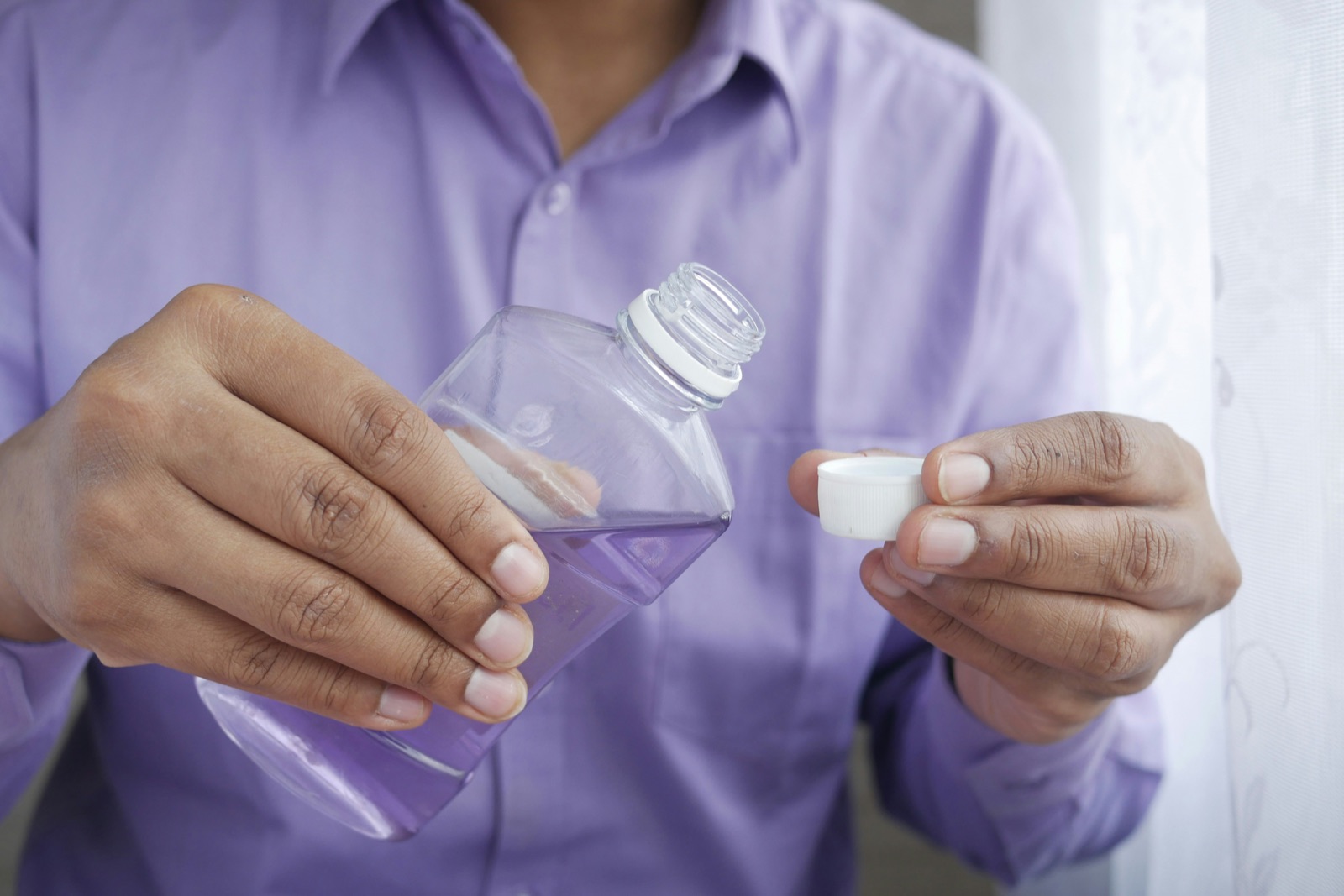
Most of us were raised to think of mouthwash as the finishing touch. Brush, floss, rinse, done: the minty feeling is the proof you did a good job. Plenty of my clients rinse twice a day without thinking about it.
I want you to think about it, because there is a group of bacteria living on your tongue that your heart depends on, and that daily rinse is very good at killing them.
Your tongue is part of your cardiovascular system
Nitric oxide is one of the most important molecules in your body for blood pressure. It tells the smooth muscle in your artery walls to relax. Relaxed vessels mean lower blood pressure and better blood flow, including to the muscles you are asking to work hard in a training session.
Your body makes nitric oxide in two ways. The first is from the amino acid arginine, inside the lining of your blood vessels. That route tends to get less efficient with age, inactivity and metabolic disease. The second route is the one most people have never heard of, and it starts with your lunch.
When you eat nitrate-rich foods (beets, arugula, spinach, celery, lettuce, Swiss chard), the nitrate is absorbed into your blood. Then something odd happens: your salivary glands pull roughly a quarter of it back out and concentrate it in your saliva, at levels far higher than in your blood. Researchers call this the enterosalivary circulation, and it looks deliberate, because your body cannot do the next step on its own.
The next step belongs to bacteria. Species living in the deep crevices on the back of your tongue (Neisseria, Rothia, Veillonella, Actinomyces and others) carry enzymes that convert nitrate into nitrite. You swallow that nitrite, and from there your stomach, blood and tissues convert it into nitric oxide. That is the pathway behind beet juice in endurance sport, and a large part of why diets heavy in leafy greens are linked to lower blood pressure.
What happens when you rinse them away
The clearest test of this was published in 2013 by Vikas Kapil, Amrita Ahluwalia and colleagues in Free Radical Biology & Medicine. They had healthy adults use an antiseptic (chlorhexidine) mouthwash twice a day for one week and measured what happened.
- Oral nitrite production dropped by about 90 percent.
- Nitrite in the blood fell by about a quarter.
- Blood pressure went up, by roughly 2 to 3.5 mmHg, and the rise tracked the fall in nitrite.
A few points of blood pressure does not sound dramatic. But this was one week, in healthy young people, from a habit that many adults repeat twice a day for decades. At the population level, small sustained shifts in blood pressure are exactly the kind that move stroke and heart attack numbers.
What the long-term studies found
Controlled trials tell us the mechanism. To see what happens over years, we have to look at people living their normal lives. The best data here comes from the San Juan Overweight Adults Longitudinal Study, led by Kaumudi Joshipura at Harvard and the University of Puerto Rico, which followed more than a thousand adults aged 40 to 65 for about three years.
- Prediabetes and diabetes (Nitric Oxide, 2017): people who used over-the-counter mouthwash twice a day or more had about a 55 percent higher risk of developing prediabetes or diabetes than people who did not use it.
- High blood pressure (Blood Pressure, 2020): the same twice-daily users had about an 85 percent higher risk of developing hypertension.
Two honest caveats. These are observational studies, so they show an association, not proof that mouthwash caused the outcome. And people who rinse twice a day may differ in other ways. What makes the findings worth taking seriously is that they line up neatly with the mechanism the controlled trials have already shown. Nitric oxide matters for insulin sensitivity as well as blood vessel tone, so the two results point in the same direction.
Why this matters for anyone who trains
After a solid workout, your blood pressure normally dips below its resting level for a while. It is called post-exercise hypotension, and it is one of the ways regular exercise lowers blood pressure over time. Nitric oxide is part of what drives it.
In 2019, Craig Cutler, Raul Bescos and colleagues at the University of Plymouth tested what mouthwash does to that dip. Twenty-three healthy adults ran on a treadmill for 30 minutes on two separate days, then rinsed during recovery with either antibacterial mouthwash or mint-flavoured water.
- With water, systolic blood pressure dropped by an average of about 5.2 mmHg an hour after exercise.
- With mouthwash, it dropped by only about 2 mmHg, a reduction in the benefit of more than 60 percent.
- By two hours, the blood pressure-lowering effect in the mouthwash condition was gone.
Put plainly: you can do the work, eat the beets, and then rinse away part of the payoff on your way out of the gym.
Is all mouthwash the same?
No, and I want to be careful here. Most of the strongest evidence is for antiseptic rinses, particularly chlorhexidine, which is a powerful broad-spectrum antibacterial. Other antibacterial ingredients have been studied less, and the results vary. So the fair wording is that daily antiseptic mouthwash can blunt or cancel much of the cardiovascular benefit of dietary nitrate, not that every rinse erases it completely.
Some people genuinely need a prescription rinse: after oral surgery, during treatment for active gum disease, or for other specific reasons. If your dentist has prescribed one, use it as directed for as long as directed, and ask them before you change anything.
What to do instead
Protect your mouth and your heart
- Brush twice a day and floss daily. That is what actually protects your gums. Gum health matters for your heart too: periodontal disease is itself associated with higher blood pressure.
- Skip antiseptic mouthwash as a daily habit. Keep it for when your dentist prescribes it, for a specific reason and a specific length of time.
- Do not rinse after training. If you want to freshen up after the gym, use plain water.
- Feed the pathway. Beets, arugula, spinach, celery, lettuce and chard every day. Leafy greens count just as much as beet juice.
- Mind your tongue. A gentle tongue scrape or brush is fine. You are clearing debris, not sterilising the surface.
- If bad breath is the reason you rinse, treat it as a signal rather than a smell to cover. Persistent bad breath can point to gum disease, dry mouth, reflux or an imbalance further down the gut, and it is worth finding out which.
The bigger lesson: you are an ecosystem
I keep coming back to the same idea in these posts, whether we are talking about fibre and your gut or bacteria on your tongue. You are not one organism. You are a host to trillions of microbes, and many of them are doing jobs your body cannot do without them. Converting nitrate is one of those jobs.
"Kill 99.9 percent of germs" made sense as a marketing line when we thought all bacteria were the enemy. We know better now. The goal is not a sterile mouth or a sterile gut. It is a balanced one, where the residents that work for you are fed and the ones that do not are kept in check.
The honest summary
Brush and floss. Eat your greens. Leave the bacteria on your tongue alone unless your dentist has a specific reason to target them. If you rinse with antiseptic mouthwash twice a day out of habit, that is one of the easiest changes you will ever make for your blood pressure, and it costs you nothing.
Want to know what your microbes are doing?
Our Microbiome Gut Test shows which strains you carry, what is overgrown, what is missing, and what to feed. We build your nutrition and supplement plan around the ecosystem you actually have. Book your free supplement consult this month and get 10% off the vitamins from your protocol through October 31. Testing and coaching happen at our private studio near the Yellowhead corner in Edmonton.
Book a consultationSources: Kapil V, et al. Physiological role for nitrate-reducing oral bacteria in blood pressure control. Free Radical Biology & Medicine, 2013. · Joshipura KJ, et al. Over-the-counter mouthwash use and risk of pre-diabetes/diabetes. Nitric Oxide, 2017. · Joshipura K, et al. Over-the-counter mouthwash use, nitric oxide and hypertension risk. Blood Pressure, 2020. · Cutler C, et al. Post-exercise hypotension and skeletal muscle oxygenation is regulated by nitrate-reducing activity of oral bacteria. Free Radical Biology & Medicine, 2019. · Lundberg JO, Weitzberg E, Gladwin MT. The nitrate-nitrite-nitric oxide pathway in physiology and therapeutics. Nature Reviews Drug Discovery, 2008. This article is for education and is not a substitute for advice from your dentist or physician.