HRV and Resting Heart Rate: How Your Wearable Predicts Illness Before You Feel It
If you wear a Whoop, an Oura Ring, a Garmin, or an Apple Watch, you're sitting on a small superpower. Two numbers your device is quietly tracking every night can tell you a cold, a flu, or an overtraining hole is coming — two to three days before you feel it. Here is the rule I use with my clients, the science behind why it works, and exactly what to do when the signal appears.
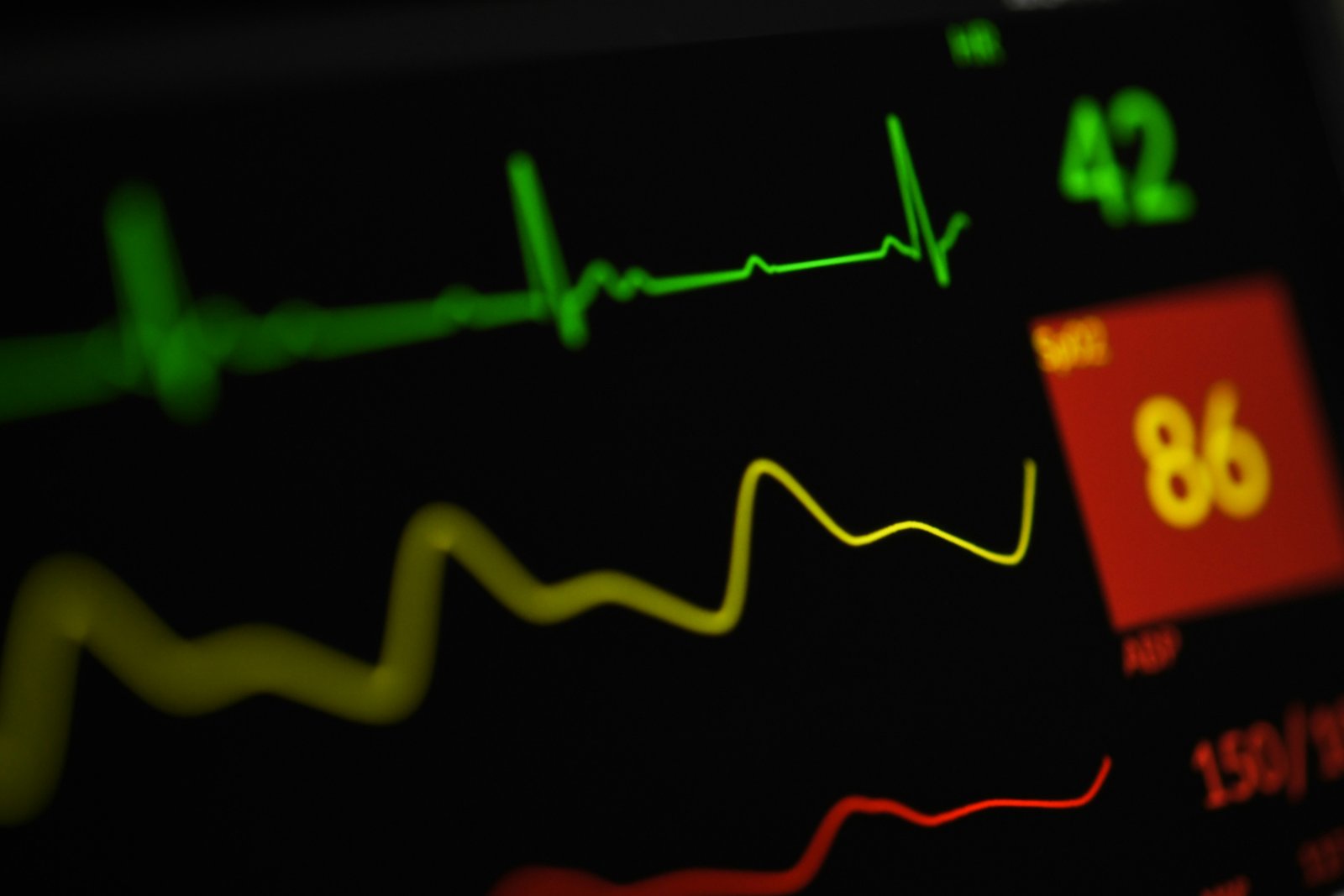
Last Sunday morning I woke up feeling off. Not sick — just not quite right. I had a run scheduled. My competitive brain wanted to push through it. My body was quietly asking for a rest day. I should have listened. I didn't. I ran anyway, felt worse with every kilometre, and by Monday morning I was properly sick and had to take the entire day off.
My wearable had already told me this was coming. I just chose not to read it.
Almost every client I coach owns a wearable of some kind now — a Whoop, an Oura Ring, a Garmin, an Apple Watch, a Fitbit, a Polar strap. And almost none of them use the two most valuable numbers the device is measuring. Those two numbers are your resting heart rate (RHR) and your heart rate variability (HRV). Watched together, they are the closest thing consumer wellness has to a genuine early-warning system for illness, overtraining, and burnout.
Here is exactly what they mean, why they matter, and what to do with them.
What Heart Rate Variability Actually Is
Most people assume a healthy heart beats like a metronome. It doesn't — and it isn't supposed to. The gap between one beat and the next varies by a few milliseconds every single time. That variation is heart rate variability, and the size of it is a direct readout of one of the most important balances in your body: the tug-of-war between your parasympathetic and sympathetic nervous systems.
Your sympathetic nervous system is the "gas pedal" — fight, flight, stress, effort, alertness. It raises heart rate, tightens blood vessels, releases cortisol, and prepares you to do hard things. Your parasympathetic nervous system is the "brake" — rest, digest, repair, recover, sleep. It slows heart rate, opens blood vessels, promotes digestion, and lets your body actually do the maintenance work it needs to do.
When you are well-recovered and your parasympathetic system is dominant, your heart has more room to breathe between beats — the variation from beat to beat is larger. That shows up as higher HRV. When you are under load — from stress, poor sleep, alcohol, illness, or hard training — your sympathetic system takes over, your heart tightens up rhythmically, and HRV drops.
A few important notes. HRV is deeply individual — one person's normal is 30 milliseconds and another's is 90, and both are healthy. HRV drops naturally with age. It varies with menstrual cycle, alcohol, poor sleep, and time zones. The number itself is nearly meaningless in isolation. The trend — your number, tracked against your baseline, over time — is where the value lives.
What Resting Heart Rate Actually Is
Your resting heart rate is exactly what it sounds like: how many times your heart beats per minute when you are fully at rest. The most useful reading is the one your wearable captures during your deepest sleep, because it is the closest we can get to your body's true baseline demand.
For adult humans, "normal" resting heart rate is a very wide band — the textbook range is 60 to 100 beats per minute, with trained endurance athletes commonly sitting in the 40s and low 50s. But again, the population average matters less than your average. Someone who normally sleeps at 55 and wakes up two mornings in a row at 62 is telling us something meaningful. So is someone who normally sleeps at 68 and suddenly bumps to 76.
Your resting heart rate rises when your system is under load — from any source. That includes:
- Illness prodrome — your immune system is mounting a response, even if you don't feel it yet.
- Poor sleep or short sleep the previous night.
- Alcohol — even a single drink measurably elevates the next morning's RHR and suppresses HRV.
- Accumulated training stress — a hard block, a race, or overtraining without adequate recovery.
- Emotional and cognitive stress — a bad day at work, a difficult conversation, an argument, a bereavement.
- Dehydration or under-eating, particularly for female clients around specific cycle phases.
- Environmental heat or altitude.
Every one of these puts a load on your autonomic nervous system, and every one of them shows up on the wearable before you consciously notice it.
The Rule I Use With My Clients
Here is the practical rule I coach — the one that has caught more cold-and-flu cycles early than any other habit I teach.
Sanja's Rule of Thumb
- If your resting heart rate is ~10% above your personal baseline for more than a couple of days in a row → that's your body waving a flag. Take a rest day. Sleep an extra hour. Drop training intensity.
- If your HRV drops for several consecutive nights below your personal average → same rule. Back off. Hydrate. Eat. Prioritize recovery.
- Trends beat single days. A one-off spike after a hard workout, a poor sleep, or a night out is noise. Three or four days in the same direction is signal.
Almost every time you catch that pattern early and take two easy days, you dodge the illness that was building. The reverse is equally true — if you push through the signal, you tend to lose five to ten days instead of two.
Why Your Wearable Sees Illness First
This is the piece most people don't know: your immune system starts fighting an infection before you consciously feel sick. When a virus enters your body, your immune cells begin mounting a response within hours — releasing cytokines, activating white blood cells, raising body temperature very slightly, ramping up cortisol. All of that happens days before you notice symptoms like a scratchy throat or a headache.
That immune activity puts a load on your autonomic nervous system. The load shows up as elevated resting heart rate and suppressed HRV before you feel a thing. Both Whoop and Oura have published data showing that these autonomic signals precede a positive COVID-19 test on average by two to three days, and the same pattern shows up for common colds, influenza, and other upper respiratory infections. Your wearable isn't magic. It's just watching the body's earliest response, and yours has been happening all along without you knowing.
Cortisol Is the Thread Underneath All of This
If you want to understand why HRV and RHR are such reliable early-warning systems, the single most useful concept is cortisol — your body's primary stress hormone. Anything that puts sustained load on your body drives cortisol up: illness, overtraining, poor sleep, chronic emotional stress, under-eating, and inflammatory processes of any kind.
Chronically elevated cortisol has three effects that matter here:
- It suppresses HRV by keeping the sympathetic nervous system dominant.
- It elevates resting heart rate for the same reason.
- It impairs immune function — specifically the parts of your immune system that fight viral infection.
So the same physiological state that shows up on your wearable is also the state that makes you more vulnerable to whatever pathogen you happened to be exposed to that week. It's not a coincidence. The signal and the vulnerability are one and the same. This is why listening to the trend and backing off actually works — you are removing the load that is suppressing the immune response you need.
What To Do When You See the Signal
The good news is you don't need to do anything dramatic. Here is the full playbook I give clients when the trend turns.
1. Drop training intensity for 2 to 3 days.
Not zero training — just easy work. A walk. An easy spin. Some mobility. You are not trying to detrain, you are trying to remove the sympathetic load so your immune system has the metabolic budget to finish the job it started.
2. Sleep an extra hour.
Every additional hour of good-quality sleep is measurable immune reinforcement. Go to bed one hour earlier. Skip the late scroll. Blackout the room. This is not optional in this window.
3. Hydrate aggressively.
Water plus electrolytes. Dehydration compounds every part of the picture — it raises RHR further, thickens mucus (which is the terrain the pathogens are living in), and reduces the efficiency of every biological process your recovery relies on.
4. Eat enough, and eat well.
This is not a week to be in a caloric deficit. Protein at every meal, vegetables, plenty of vitamin C and zinc sources. Under-eating in this window is a fast way to turn a two-day recovery into a two-week illness.
5. Skip the alcohol.
Alcohol is a direct HRV suppressor and a direct sleep disruptor. If your wearable is already flashing yellow, adding wine on Wednesday night is the surest way to make it worse.
6. Watch the trend for the next 48 hours.
If your numbers stabilize and start climbing back toward baseline, you caught it. Return to normal training gradually. If they keep dropping despite the recovery interventions, or if symptoms appear anyway, treat it as illness — full rest, and don't return to training until you have been symptom-free for at least 24 hours and your baseline has re-established itself.
Overtraining and Illness Look Almost Identical on Your Wearable
Here is a subtlety worth understanding. Both illness and overtraining show up as elevated resting heart rate + suppressed HRV, because they place the same kind of load on your autonomic nervous system. Your wearable cannot distinguish "I have a virus" from "I have accumulated too much training stress without enough recovery" — the signals look the same.
What this means practically: the treatment is essentially the same too. Rest, sleep, food, hydration, easy movement. Whether the underlying cause is a pathogen or a training-load miscalculation, the correct response is the same one, and executing it fast keeps a small problem from becoming a large one.
Finding Your Personal Baseline
To read the trend, you need to know your own numbers. Give your wearable two to four weeks of consistent nightly wear to establish your baseline. Most modern devices — Whoop, Oura, Garmin, Apple Watch — will show you a rolling 14- or 30-day average for both RHR and HRV, which is the number to compare against. Ignore comparisons to the population. Your baseline is your baseline.
Once you have that baseline, check it in the morning as a habit — the same way you'd check the weather. Ten seconds. You're looking for one thing: is the trend consistent with baseline, or is it drifting? If you make this a five-second daily habit, you will catch nearly every cold, flu, and overtraining hole before it lands.
Which Wearables Actually Measure This Well
All of the modern wearables measure HRV and RHR, but the sampling frequency, methodology, and accuracy differ. If you don't have one yet and are choosing:
- Oura Ring — excellent HRV accuracy, especially during sleep. Discreet. Requires a subscription for full features.
- Whoop — subscription-based band, very well-validated HRV and RHR data, strong recovery scoring model.
- Garmin watches — good HRV tracking on newer models (Body Battery uses it), especially reliable in athletes.
- Apple Watch — measures HRV on demand and passively; less continuous than Oura or Whoop, but still useful once you understand what to look at.
- Fitbit / Polar — both provide HRV and RHR trend data; look at the trend, not the single number.
The best device is the one you will actually wear every single night. The trend data is only useful if the data collection is consistent.
A Final Word: Data Is Not a Substitute for Judgement
Everything above is a decision-support tool, not a diagnostic device. Wearables are not medical devices, their accuracy varies, and there are always days where you will feel great with "bad" numbers or feel terrible with "good" ones. Use the trend as one input among many — how you feel, how you slept, what your training block asks of you today, what life is throwing at you this week. If your numbers are chronically off and you don't know why, that's a conversation for your doctor, not another tweak to your training program.
But if you are willing to spend ten seconds each morning learning to read the trend, your wearable will pay you back many times over — in workouts saved, in illnesses dodged, in a training career that stays consistent instead of stopping and starting.
Listen to your body. The wearable is helping you do exactly that.
Want Coaching That Uses Your Data This Way?
At Body In Fushion we build training and recovery programs that read the person, not just the plan on paper. If you have a wearable and don't know how to use it — or you want a coach who does — we would love to help.
Book a Consultation