What Is the Wolverine Stack? BPC-157, Tendon Repair, and an Honest Answer on Whether It Is Safe
Four people asked me about it in one week, so here it is properly. The "Wolverine stack" is two peptides taken together for injury recovery, and the one doing the work is BPC-157 — a molecule discovered in Croatia three decades ago, studied for tendon, ligament, muscle and gut repair ever since, and now moving toward the mainstream in the United States. Here is where it came from, what the research actually shows, what it means that Canadian doctors can prescribe it, and how to do your homework if you are thinking about it.
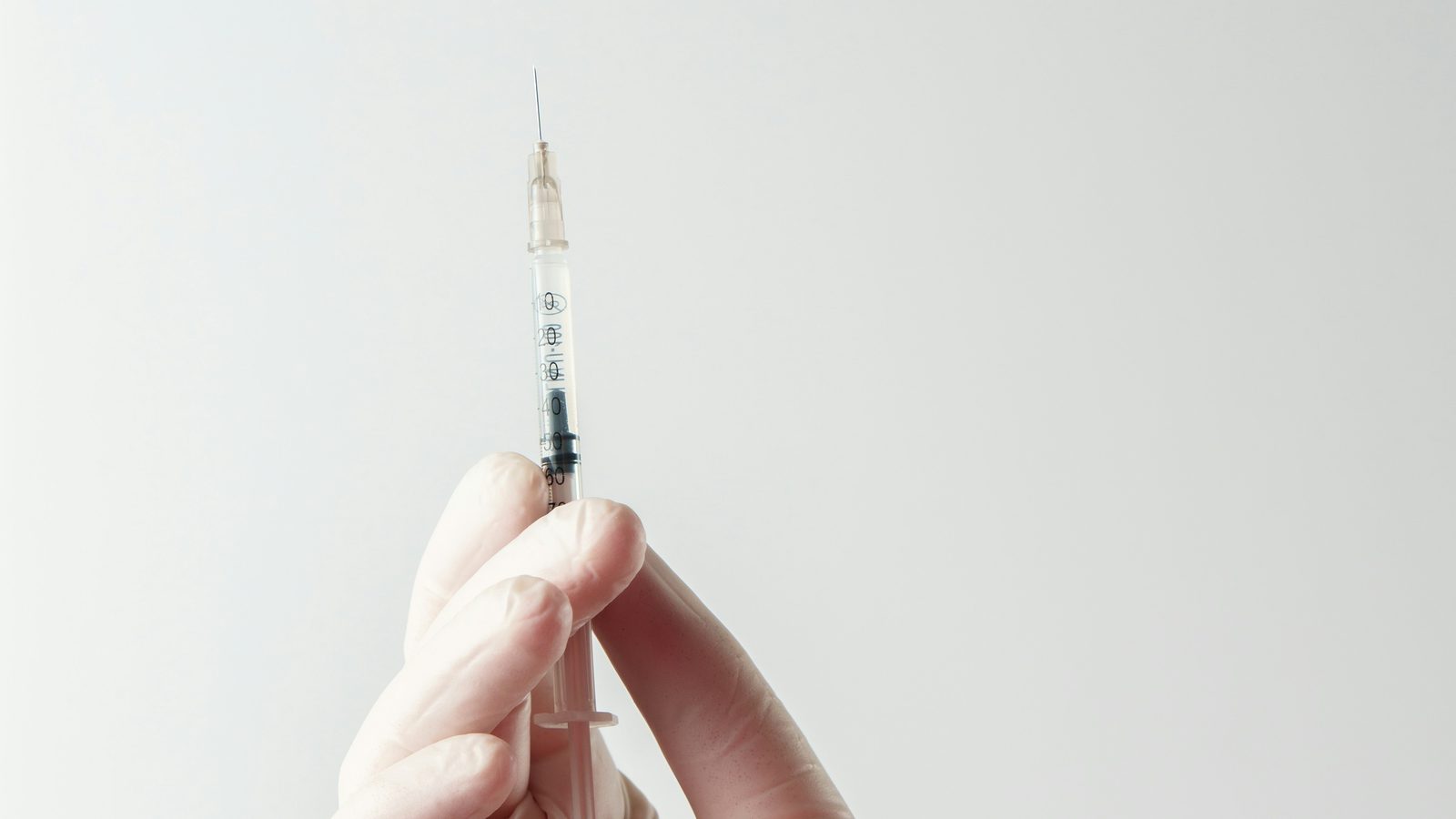
If you train hard for long enough, you eventually meet a tendon that will not cooperate. An Achilles that is tight every morning. A golfer's elbow that flares every time you deadlift. A shoulder that has been "almost better" since March. Tendons heal slowly, and anyone who has nursed one knows the particular frustration of doing everything right and waiting anyway.
So it is no surprise that the most-asked question at my front desk this month has been about a shortcut. "What is the Wolverine stack, and is it safe?" I have now been asked it four times in a week, by four very different people, which tells me the conversation has left the bodybuilding forums and arrived in ordinary gyms. Let's do it properly.
What the Wolverine stack actually is
The nickname refers to two peptides taken together for injury recovery: BPC-157 and TB-500. The Wolverine name is a joke about the comic-book character who heals from anything, and it stuck because that is exactly the promise being made online.
Of the two, BPC-157 is the one with the research behind it, and it is the one people mean when they ask. So that is what this post is about. (TB-500 is a synthetic fragment of a protein called thymosin beta-4; it has far less published work, and I would not put my name to claims about it yet.)
BPC-157 stands for Body Protection Compound. It is a chain of fifteen amino acids — a peptide, which if you read my earlier guide you will know is simply a short piece of protein — and its sequence is copied from a protein found naturally in human stomach juice.
Discovered in Croatia, thirty years ago
This part matters, because it tells you this is not a new molecule that appeared on a website last year. BPC-157 was identified in Zagreb, Croatia, in the early 1990s, by a research group led by Predrag Sikirić at the University of Zagreb School of Medicine. They were studying the protective compounds in gastric juice — the reason your stomach can hold acid strong enough to dissolve metal without dissolving itself — and isolated the fragment that seemed to be doing the protecting.
The first use they had in mind was the gut. The Croatian pharmaceutical company Pliva took it into early clinical trials for inflammatory bowel disease in the 2000s, and Sikirić's group has published on it continuously since — well over a hundred papers. One property they found early is why it is so easy to take: BPC-157 is unusually stable. It survives more than 24 hours in human gastric juice, where most peptides are torn apart in minutes. That is why it can be given by mouth as well as by injection, which becomes important later.
Why athletes want it: tendon, ligament, muscle
Somewhere along the way the Zagreb group noticed that a gut-protecting peptide seemed to speed up healing almost everywhere they looked, and they started testing it on the tissues athletes care about.
Tendon. In 2003, Mario Starešinić and colleagues published a study in the Journal of Orthopaedic Research in which they surgically cut the Achilles tendon of rats and treated half of them with BPC-157. The treated tendons healed faster and stronger, and in the same paper the peptide stimulated tendon cells to grow in a dish. A separate 2011 study in the Journal of Applied Physiology by Chang and colleagues in Taiwan dug into the mechanism and found BPC-157 helps tendon cells survive, multiply and migrate toward the site of injury — the three things a healing tendon needs its cells to do.
Ligament. In 2010, Cerovecki and colleagues (again in the Journal of Orthopaedic Research) showed improved healing of a cut medial collateral ligament in rats, with better function and better tissue structure at every time point they measured.
Muscle. The same group has published on crushed and cut muscle, with similar results: faster recovery of both structure and function.
The mechanism that gets people excited is called angiogenesis — the growth of new blood vessels. BPC-157 appears to encourage small vessels to form and to protect the lining of existing ones, which means more blood, more oxygen and more raw material reaching damaged tissue. That matters enormously for tendons, because tendons have famously poor blood supply. It is the main reason a torn muscle heals in weeks and an irritated tendon can grumble for a year. A compound that improves circulation to exactly that kind of tissue is, on paper, the thing every athlete with a stubborn tendon has been wishing for.
And the gut, still. Because it began life as a gut peptide, there is a long line of research on BPC-157 protecting and repairing the intestinal lining and, more recently, on the gut–brain axis. A 2016 review by Sikirić and colleagues in Current Neuropharmacology pulled that work together. For anyone who has read my posts on the microbiome, that overlap — a recovery compound that also looks after the gut wall — is part of why it interests me.
What the research does not yet include
I promised an honest answer, so here is the honest part. Almost everything above was done in rats. Rats are a good model for tendon and gut biology, and thirty years of consistent animal results is not nothing. But humans are not rats, and the human evidence is still thin.
A 2025 review by Józwiak and colleagues in the journal Pharmaceuticals went looking for every published human study and found very little: a retrospective report of twelve patients who had BPC-157 injected into painful knees, with most reporting improvement, and one Phase I safety trial in healthy volunteers whose results were never published. A 2025 systematic review from the Hospital for Special Surgery in New York reached the same conclusion — promising preclinical data, and a real gap where the human trials should be.
That is not a reason to dismiss it. Plenty of useful things spent years in that gap. It is a reason to hold the claims at the right size: strong animal evidence, good early human signals, and the big trials still to come.
Is it safe?
Here is what I can tell you with confidence.
Athletes and everyday people have been using BPC-157 for many years now, in large numbers, and there is no pattern of side effects being reported. The formal preclinical safety work — a 2020 study in Regulatory Toxicology and Pharmacology by Xu and colleagues that ran the full battery of toxicology tests in animals — came back clean at doses far above anything a person would take. The peptide is a fragment of something your own stomach already makes, and your body seems to treat it that way.
Two honest caveats, briefly. First, because it encourages blood-vessel growth, researchers have raised a theoretical question about whether it could feed a tumour that was already present; nobody has shown that it does, but nobody has ruled it out with a proper trial either, and it is a sensible reason for anyone with a cancer history to talk to their oncologist first. Second, if you compete in a drug-tested sport, the World Anti-Doping Agency added BPC-157 to its prohibited list in 2022, and it is still there. For the rest of us, that is not relevant. For a tested athlete, it is disqualifying.
Where it stands: the United States is moving first
BPC-157 is not yet formally approved as a medicine anywhere, for the simple reason that nobody has run the large human trials that approval requires. But the ground is shifting, and the United States is where it is shifting fastest.
In July 2026, an FDA advisory committee met to consider whether BPC-157 should be added to the list of substances that American compounding pharmacies are allowed to prepare for patients. The committee voted in favour. That is not the same as approving it as a drug — the vote is a recommendation, not a licence — but it is the clearest official step toward legitimacy the peptide has had, and it moves it from the grey market toward the pharmacy counter.
And here in Canada
This is the part that matters most to my readers, so let me be clear about it. Canadian doctors can prescribe BPC-157. When a physician writes the prescription, a licensed compounding pharmacy can prepare it for that patient, in oral form. CBC News reported on exactly this route earlier this year.
I think that is good news. Physicians do not put their name to things they do not take seriously, and a prescription-plus-pharmacy route means someone with training is choosing the dose, someone with a licence is making the product, and someone is watching how you respond. If you want to try it, the door is open — and it runs through your doctor.
Do your due diligence
Because here is where the real risk lives. Not in the peptide. In the source.
Type "BPC-157" into a search engine and you will find dozens of websites that will sell you a vial tomorrow. Most of them label it "for research use only." Nobody is checking what is actually in it, how pure it is, how it was stored, or whether the number on the label bears any relationship to what is inside. The peptide has a good track record. The website you are about to buy it from may not.
If you are considering it
- Talk to a medical professional first. Your doctor, a sports-medicine physician, or someone who actually works in this industry. One real conversation is worth more than any label or any forum thread.
- A compounding pharmacy with a prescription is a perfectly good source. That is what they exist for, and it is the route the Canadian system has open.
- Research the company. Whoever you buy from, know who they are. A real address, real people, and a willingness to answer questions about their product.
- Treat it as a medicine, not a supplement. Decide what you are treating, how long you will give it, and how you will know whether it worked.
- Keep doing the boring things. No peptide replaces progressive loading, sleep, protein and time. It is a possible addition to a rehab plan, not a substitute for one.
My take
I have watched a lot of things come through the fitness world with a superhero name attached, and most of them deserved the eye-roll. This one is different. BPC-157 has three decades of consistent research, a clean safety record, a plausible mechanism for exactly the injuries that frustrate us most, and it is now being taken seriously by regulators in the United States and by physicians here in Canada.
It is not proven yet. Promising is not proven, and I will keep saying so until the human trials are done. But if you have a tendon that has been "almost better" for a year, it is a legitimate conversation to have with your doctor — and I am happy to be part of that conversation with you.
Nursing a stubborn injury?
Before you add anything to the plan, make sure there is a plan. We build rehab and training programmes around how your body actually heals — progressive loading, recovery, nutrition and, where it makes sense, a conversation about what else might help. Book a consultation with Sanja or Kurtis at our private studio near the Yellowhead corner in Edmonton, or reply to this week's Fushion Times.
Sources: Starešinić et al., Journal of Orthopaedic Research, 2003 (rat Achilles tendon). Cerovecki et al., Journal of Orthopaedic Research, 2010 (rat ligament). Chang et al., Journal of Applied Physiology, 2011 (tendon cell survival and migration). Sikirić et al., Inflammopharmacology, 2006 (Pliva IBD trials). Sikirić et al., Current Neuropharmacology, 2016 (gut–brain axis review). Xu et al., Regulatory Toxicology and Pharmacology, 2020 (preclinical safety). Lee & Padgett, Alternative Therapies in Health and Medicine, 2021 (12-patient knee series). Józwiak et al., Pharmaceuticals, 2025 (literature and patent review). Vasireddi et al., HSS Journal, 2025 (systematic review). FDA Pharmacy Compounding Advisory Committee, July 2026. WADA Prohibited List, 2022 onward. CBC News, 2026, on prescribing and compounding BPC-157 in Canada. This article is for education and is not medical advice; talk to your physician before starting any new treatment.