The 30-Second Isometric Hold That Keeps Tendons Strong (And Painless)
Muscles grow through reps. Tendons don't. They respond to sustained mechanical tension — and the single most powerful tool we have for building tendon resilience is a boring, unglamorous, thirty-second hold performed one side at a time. Here is why it works, the science backing it, and the exact protocol.
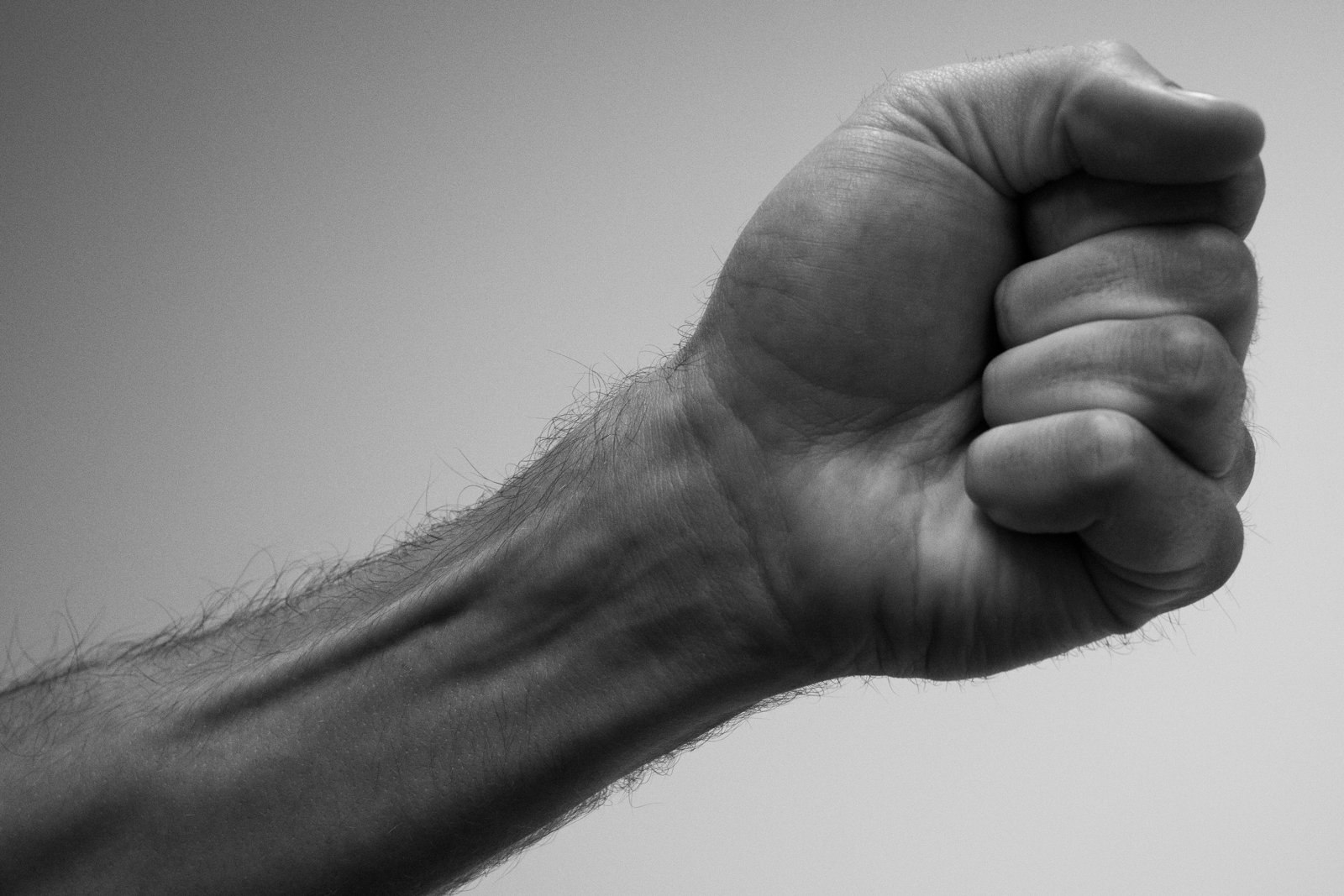
Here is the single most common training injury I see in adults over forty: tendon pain. It shows up as a nagging patellar tendon that flares on stairs, a stubborn Achilles that hurts every morning for the first ten steps, a tennis elbow that ignores every stretch you throw at it, a rotator cuff that starts pinching after benching. It's not the muscle. It's the tendon — the thick, tough band of connective tissue that transmits force from your muscle to your bone.
Most people treat this the way they'd treat muscle soreness: rest, stretch, foam roll, wait it out, then start training again. And most people find that when they come back, the same tendon flares up in the same place a few weeks later. Because tendons don't work like muscles. They don't heal on the timeline you expect, they don't respond to the interventions you'd use for a strain, and they demand a specific type of loading to remodel and get stronger.
That specific loading has a name — the isometric hold — and the evidence for it is now strong enough that it's a first-line intervention in sports physiotherapy worldwide. What follows is the framework I coach every client through when we build tendon resilience into their program.
Why Tendons Are Different From Muscles
A muscle is a contractile tissue. It shortens, lengthens, produces force, and adapts to reps and load in relatively rapid cycles — sore in 24 hours, adapted in a week or two. A tendon is a connective tissue. It's roughly 30% water, 70% dense collagen, with almost no blood supply. It doesn't contract. It transmits.
Because it has such a poor blood supply, a tendon adapts far more slowly than a muscle — on the order of months, not weeks. And because its job is force transmission (not force production), it responds to a very different type of stimulus: sustained tension rather than repeated contraction. You can do a thousand knee extensions and never meaningfully change your patellar tendon. Or you can do three thirty-second isometric holds and directly signal it to remodel.
This is why the standard "just add more reps" approach to tendon pain almost always fails. You are giving the muscle a signal it doesn't need and the tendon a signal it can't use.
The Ebonie Rio Research — Why the 30-Second Number Matters
The clinical protocol most sports physios now use for tendon rehab comes largely from the work of Dr. Ebonie Rio, a physiotherapist and researcher at La Trobe University in Australia. In 2015, Rio and her team published a study on athletes with patellar tendinopathy — a chronic form of "jumper's knee" that had resisted other interventions. The intervention they tested was strikingly simple: heavy isometric holds at approximately 70% of maximum voluntary contraction, held for 45 seconds, five reps, once a day.
The results were dramatic. Pain scores dropped substantially during the very first session, and the analgesic effect lasted for up to 45 minutes after the workout. Over the following weeks, function and structural markers of the tendon improved. Since then, variations of the protocol have been applied to Achilles tendinopathy, elbow tendinopathy, gluteal tendinopathy, and rotator cuff issues — with generally similar results, though the specific dose is being refined for each site.
The two clinically meaningful takeaways for a training population — not just rehab patients — are:
- 30 to 45 seconds at ~70% max, held under control, is the effective dose. Shorter than that and the tendon isn't accumulating enough time under tension. Longer than that and you're just fatiguing the surrounding muscle.
- You don't have to be injured for it to work. The same loading pattern that heals a painful tendon also strengthens and thickens a healthy one — meaning the same protocol is both rehab and prehab.
Why Unilateral (One Side at a Time) Matters
Here is the piece most people miss. When you perform a bilateral hold — think two-leg wall sit, both-arm plank, both-leg calf raise — your body is very good at unconsciously letting the stronger side carry more of the load. You feel like you're loading both tendons equally. You're not.
By splitting the hold to one side at a time, you accomplish three things that a bilateral hold cannot:
- You force each tendon to handle the full load. No compensating, no shifting to the strong side. The weak side finally gets a truthful signal.
- You reveal asymmetries. If your right calf can hold a single-leg calf-raise hold for 45 seconds and your left is shaking at 22, you've found an injury waiting to happen. Now you can fix it before it fires.
- You train the nervous system to produce force in isolation. Every athletic movement — running, throwing, jumping, changing direction — happens on one leg or through one side of the body at a time. Bilateral training teaches you to move as two symmetric halves; the world doesn't work that way.
This is why I coach almost all tendon work as unilateral by default at Body In Fushion. It's slower to log, it's harder to feel good about, and it exposes weaknesses no one enjoys seeing. But it works dramatically better than the two-sided version.
The Prescription — Exactly What to Do
The Unilateral Isometric Protocol
- Pick your target tendon. Common problem areas: patellar (front of knee), Achilles (back of heel), gluteal (side of hip), rotator cuff (shoulder), lateral elbow (tennis elbow), medial elbow (golfer's elbow), and wrist flexors/extensors. Match the exercise to the tendon (specific examples below).
- Load one side. A single-leg wall sit for patellar tendon. A single-leg calf raise hold at the bottom for Achilles. A single-arm plank on forearm for shoulder. A single-arm farmer's carry hold for grip and elbow.
- Hold 30 to 45 seconds at roughly 70% effort. If your best possible hold is 60 seconds, work at a load where 30 to 45 seconds is challenging but doable.
- Repeat 3 to 5 times per side. Rest 60 to 90 seconds between reps.
- Frequency: 2 to 3 times per week. Either at the end of your training session or as a standalone morning routine on rest days.
- Progression: add load, not time. Once 3 sets of 45 seconds is easy, add weight (backpack, dumbbell, kettlebell) rather than extending the duration.
Total weekly time: under 15 minutes. Equipment: minimal. Payoff: tendons that stop hurting, joints that don't quietly derail your training year, and a body that ages significantly better than it would without this.
The Best Unilateral Holds by Body Part
To make this concrete, here are the specific single-side holds I recommend most often for the tendons that give people the most trouble:
Patellar Tendon (Front of Knee)
Single-leg wall sit — back against wall, knee at 60 degrees, hold. Or Spanish squat with a resistance band around your knees.
Achilles Tendon (Back of Heel)
Single-leg calf-raise isometric at the mid-range position (heel neither fully up nor fully down). Or heavy heel-raise hold off a step with the ball of the foot loaded.
Rotator Cuff / Shoulder
Single-arm plank hold on forearm. Or single-arm resistance-band pull at 90 degrees, held.
Lateral Elbow (Tennis Elbow)
Isometric wrist-extension hold against a light weight or resistance band, held one arm at a time.
Gluteal Tendinopathy (Side of Hip)
Copenhagen plank or single-leg glute-bridge hold with the working leg on the ground and the other leg extended.
Grip and Forearm Tendons
Single-arm farmer's carry hold — pick up a heavy dumbbell in one hand, stand tall, hold for 30 to 45 seconds without moving. (If you're doing our monthly Farmer's Walk challenge, this doubles as event-specific training.)
When to Do Them (And When Not To)
Two situational calls to make it work in real training:
If you have a niggle starting: This is when isometric holds are most valuable and most underused. Most people wait until pain is fully established, then take a week off, then try to train through it. The much better play is to add unilateral isometric loading to the tendon as soon as you notice the first hints of discomfort. Rio's research shows the pain-reducing effect kicks in within the first session.
Before a session where the tendon feels stiff: A quick set of holds before your workout — thirty seconds per side — will lubricate the joint and reduce pain for the next 45 minutes. This is a legitimate use of the analgesic window from the research.
When to skip: If you have an acute, sharp, "something just tore" kind of pain, don't power through it — get assessed. Isometrics are for chronic tendon issues and prehab, not for acute injuries.
My Two Cents on the Bigger Picture
Here is the unsexy truth about tendon work: it never becomes exciting. There are no reps to count, no personal records to hit, no photo you'd want to post from a wall-sit. It's boring, it's uncomfortable, and it's the single most important thing you can do to keep training past forty without breaking down.
The people I know who lift into their sixties and seventies with fully functional joints are not the people who trained the hardest in their thirties. They're the people who put in the two boring minutes a week to protect the connective tissue that carries the load. Unilateral isometric holds are that two minutes.
Add them to the end of your next three sessions. Pick the tendon you'd most like to bulletproof. Hold for 30 seconds on each side, three rounds. Do that for four weeks and check back with yourself. You'll notice.
Want a program that thinks about your tendons the way it thinks about your lifts?
Longevity-first training, joint resilience, and evidence-based recovery are baked into how we coach every client at our Edmonton studio. From DNA-informed programming to gut microbiome work to prehab protocols like the one above, our private studio near the Yellowhead is built around the unglamorous, evidence-based habits that keep you training well into every decade of life.
Book a Consultation