How Much Protein Do You Actually Need Per Day? The Per-Decade Truth Most People Get Wrong
Most active adults are eating far less protein than they think — and the per-meal dose required to actually build muscle goes up with every decade. The targets, the science of anabolic resistance, and the prescription from Edmonton's longevity coach.
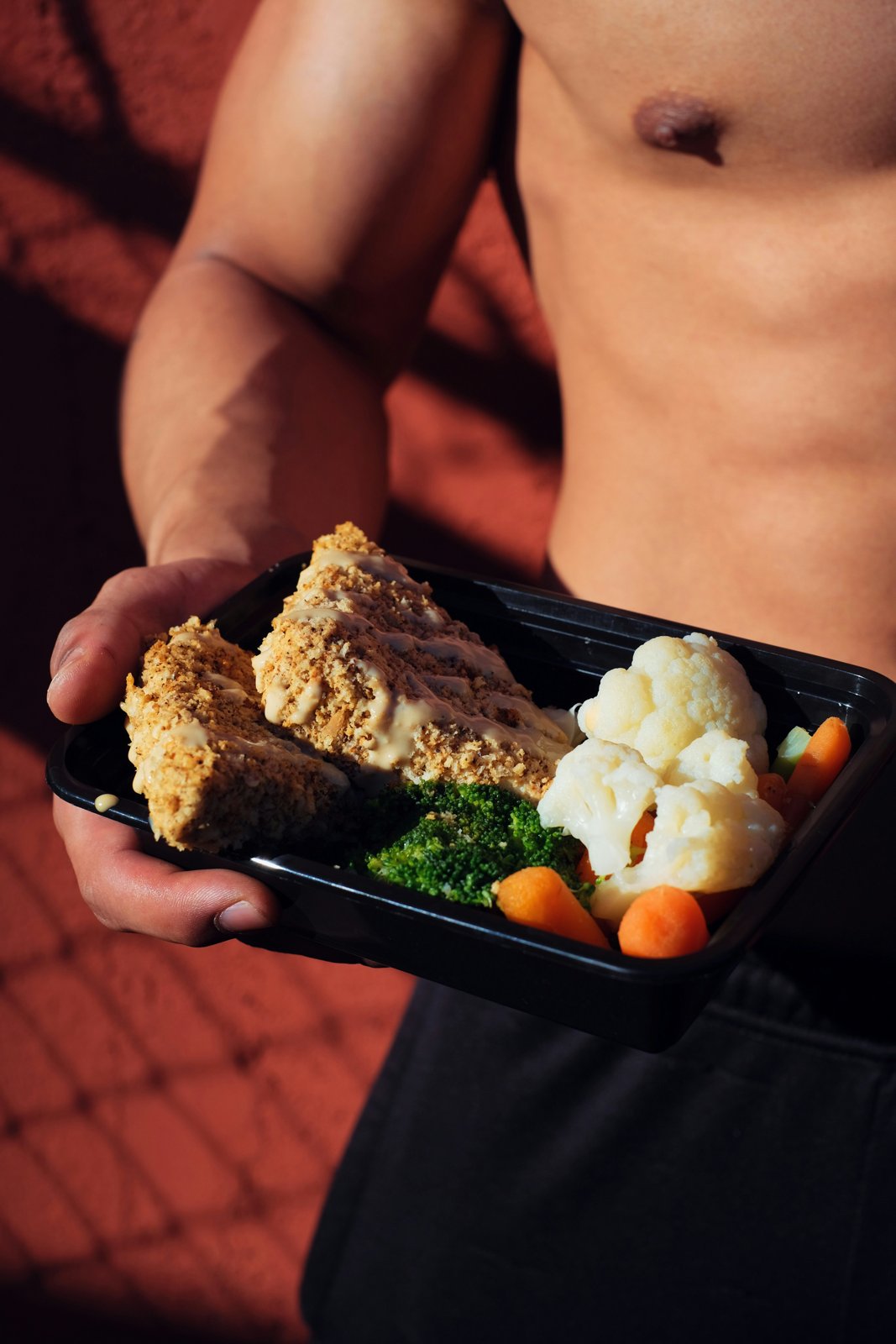
This is the question I get more than any other in our Edmonton studio: "How much protein do I really need? And can I overdo it?"
The honest answer is that most of you are eating considerably less than you think — and the consequences of that quiet under-eating, compounded across decades, are the single biggest reason people lose strength, posture, metabolism, and independence as they age. This is not melodrama. This is the boring, uncomfortable reality of how human bodies work, and it's why I want to spend a few minutes on the actual numbers.
The Daily Target: Start Here
For an active adult, aim for roughly 0.8 to 1 gram of protein per pound of your goal bodyweight, per day. Not your current weight. Your goal weight. Here's what that looks like for typical Edmonton clients walking through our door:
| Goal Weight | Daily Protein Target | Reality Check |
|---|---|---|
| 130 lbs (woman, lean tone) | 105–130 g | About 4–5 palm-sized portions of protein |
| 150 lbs (woman, athletic) | 120–150 g | Most fall short by 40–60g daily |
| 180 lbs (man, training) | 145–180 g | Typical Canadian male eats 90–120g |
| 200 lbs (man, hard training) | 160–200 g | Almost never hit without intention |
Look at those numbers honestly. Then think about what you actually ate yesterday. For most adults — especially women, and especially anyone over 40 — there is a significant gap between the daily target and the daily reality. That gap is where the slow loss of muscle starts.
Why So Much? Protein Is the One Macro Your Body Can't Store
Your body can store carbohydrate as glycogen. It can store fat almost indefinitely. But it has no storage system for protein. Whatever you eat today gets used today — for tissue repair, hormone production, neurotransmitter synthesis, immune function, and the maintenance of every cell in your body. Skip it, and your body breaks down the protein already in your muscles to find the amino acids it needs.
That's a survival mechanism, and it works fine for short stretches. Done daily, across years and decades, it is also exactly how muscle quietly disappears.
Hit your target consistently, on the other hand, and you keep your metabolism high (muscle is metabolically active tissue), your hunger low (protein is the most satiating macro by a wide margin), your blood sugar steadier, and your recovery sharp.
The Part Almost No One Talks About: Anabolic Resistance
Here is where it gets interesting — and where the standard protein advice falls apart for anyone over 40.
As we age, our muscles become what the research calls anabolically resistant to protein. In plain English: the same meal that built muscle for you at 25 barely registers at 55. Your body needs a bigger per-meal dose to flip the muscle-protein-synthesis switch on. The threshold is mostly governed by a single amino acid called leucine, which acts as the signal that tells your muscles, "okay, build now."
So as the decades stack up, the per-meal target goes up with them — even if your total daily target stays roughly the same.
Per-Meal Protein Targets, By Decade
- Under 40: Roughly 20–30 grams per meal is plenty to trigger muscle growth.
- 40 and up: Bump it to 30–40 grams per meal to overcome early anabolic resistance.
- 50 and up: Aim for 40–50 grams per meal. Yes, really. This is the dose that keeps muscle on you in your sixth, seventh, and eighth decades.
If you're in your fifties hitting 25 grams at breakfast (a "healthy" breakfast by every magazine's standards), you are not triggering muscle protein synthesis. You're maintaining barely. Multiply that across years and you understand why so many adults lose meaningful muscle mass in midlife despite "eating well."
A Few More Things Worth Knowing
1. Spread It Out
Three or four protein-anchored meals work far better than dumping it all into dinner. Your body can only use so much leucine signaling at one sitting; the rest gets oxidized for energy or excreted. Frequency matters as much as quantity. Build every meal around its protein source — meat, fish, eggs, dairy, or a clean powder — and let the rest of the plate fill in.
2. Lift Heavy Things
Resistance training is the single most powerful tool we have to push past anabolic resistance — even in your 70s and 80s. The muscle that gets loaded gets to "use" the protein you eat. The muscle that sits still doesn't, no matter how much you feed it. Diet without training is incomplete. So is training without diet. Both, together, are the prescription.
3. Lean Toward Animal Sources or Whey
Animal proteins and whey isolate are richer in leucine per gram than most plant sources — meaning you hit the anabolic threshold with less total food. This matters most as appetite tends to shrink with age. If you're plant-based, you absolutely can hit your targets, but you'll need to be more deliberate about leucine-rich choices (soy, legumes paired with grains, and pea or rice protein blends) and likely eat somewhat more total grams.
4. Pair Protein With Strength Work
The 60–90 minutes after a training session is when your muscle is most hungry for protein. Hitting your post-workout meal in that window makes every gram count more. This is not gym broscience — it's well-documented in the muscle protein synthesis literature.
Can You Eat Too Much Protein?
For healthy kidneys, the research is genuinely reassuring. Hitting the targets in this article — 0.8 to 1 gram per pound of goal bodyweight — is safe and effective for the overwhelming majority of adults. Higher intakes still have not been shown to harm kidney function in healthy people in any rigorous long-term study.
The far bigger and more common risk is the opposite: chronically under-eating protein, losing muscle quietly through the decades, and wondering in your sixties why your strength, your posture, your metabolism, and your ability to recover from minor injuries have all drifted in the wrong direction. The risk isn't the steak. The risk is the years of plates that were 70% pasta and 30% sauce, with a thin slice of chicken on the side.
If you have existing kidney disease, do this work with your physician. For everyone else: more is almost always the answer.
The Easiest Way to Hit the Number
For most clients, the breakthrough comes from a single tactical shift: anchor every meal around a protein source you actually want to eat, then build the rest of the plate. Reverse the order most North Americans use. Don't ask "what's for dinner?" and then add some protein. Ask "what's my protein?" and build the meal around it.
For the in-between moments — busy work days, post-workout, that 3pm crash — a scoop of a clean protein powder in cold water is the easiest 20–25 grams you'll ever hit. It is not a substitute for food; it is the bridge between meals when food isn't realistic. We keep clear protein powder samples at the studio for any client who wants to try a flavour before committing to a tub.
Want help building this into your actual life?
Precision nutrition is one of the four core services at our Edmonton studio. We build custom protein and meal targets around your physiology, training load, age, and goals — alongside personal training, longevity coaching, and DNA + microbiome testing for adults who want their next thirty years to be their best.
Book a ConsultationThis Week at the Studio
A few quick notes for our regulars: Emma walked in and tied Brenda at 19 on the Tire Flip Throwdown this week — the women's leaderboard is officially deadlocked heading into the final week. Final-week tiebreaker rules are unlimited attempts, highest single 60-second round wins, with the door open for new challengers to steal the title.
Quick spotlight on Darcy: two months ago, he couldn't hold a plank for ten seconds and his shoulder ached on every push-up. This week he's knocking out full push-ups and humbling-grade plank drills, pain-free. Two months of intelligent programming, ground-up rebuilding, and showing up consistently. This is what's possible.
And mark your calendar — June's challenge is the Sled Sprint Showdown: outside, max effort, one length, fastest time wins. Full rules drop next week.