The Five Minutes Most People Skip: Why Post-Workout Stretching Is the Recovery Multiplier You're Missing
Five minutes of slow, intentional stretching after your workout activates your parasympathetic nervous system, improves recovery, and prevents the injuries that quietly end most people's training careers. The science, the prescription, and why we make every Edmonton client stay for it.
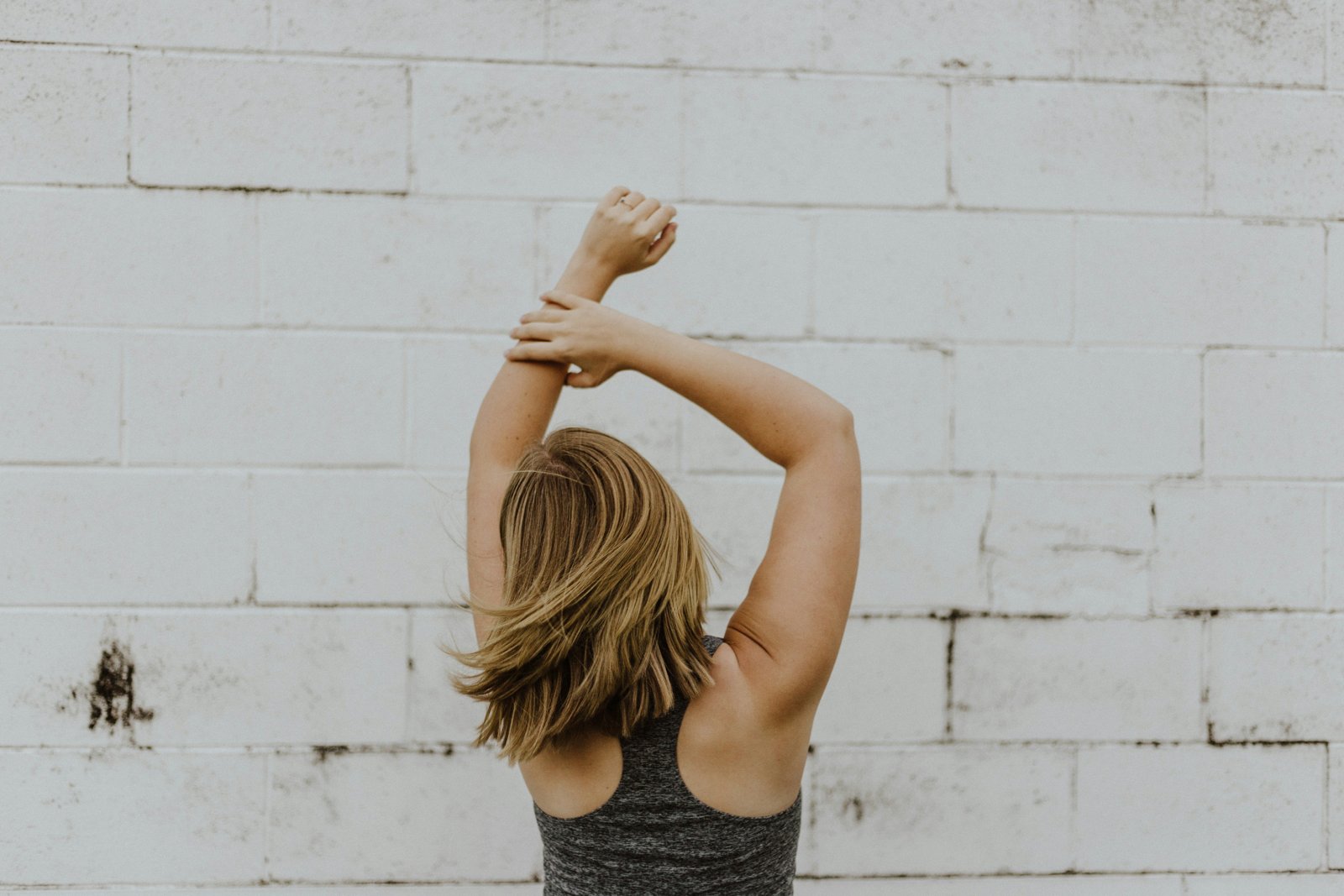
You finished the workout. You're sweaty, you're a little tired, and you have somewhere to be. The temptation in that exact moment is universal: grab the keys, get to the car, skip the cool-down, deal with the stretching "later" (which is to say, never). Don't.
Five minutes of post-workout stretching is one of the highest-return investments you can make in your body. Not for the reasons you think — not just to "feel less stiff tomorrow." The real return is something most gym-goers have never been told: five focused minutes of stretching after exercise actively shifts your nervous system out of fight-or-flight and into the recovery state where healing happens.
Here is the full picture of what those five minutes are doing — and why we make it a non-negotiable for every client who trains with us at our Edmonton longevity studio.
What Exercise Just Did to Your Nervous System
To understand why post-workout stretching matters, you have to understand what your nervous system looks like the moment you finish your last set.
Your autonomic nervous system has two branches. The sympathetic branch is your "fight, flight, or perform" mode — racing heart, elevated cortisol, blood diverted to working muscles, attention sharpened, body primed for output. The parasympathetic branch is your "rest, digest, and repair" mode — slower heart rate, lower stress hormones, blood directed to digestion and tissue repair, body primed for recovery and growth.
A hard workout dumps you firmly into the sympathetic state. That is exactly what you want during training — it's how you lift heavy, push hard, and adapt. But the body cannot recover, repair tissue, or build adaptation while it's still in sympathetic mode. Recovery only happens parasympathetically.
And here's the catch: your body does not automatically flip the switch the moment you rack the last weight. Without deliberate input, many people drift around in a half-activated sympathetic state for hours after training — which is why they sleep poorly that night, feel "wired but tired" all evening, and wake up sorer than they should be.
Stretching is the switch.
How Slow Stretching Activates Your Recovery State
Slow, intentional stretching — paired with controlled breathing — directly stimulates the vagus nerve, the longest nerve in your body and the master regulator of the parasympathetic system. The vagus nerve runs from your brain down through your throat, chest, and into your gut, and it is exquisitely responsive to two inputs: slow exhales and gentle, sustained mechanical stretch on tissue.
When you fold into a hamstring stretch, breathe out slowly through your nose, and hold the position for thirty seconds, you are sending a chemical message to your nervous system that reads, quite literally: "It is safe. You can stand down now." Heart rate slows. Cortisol falls. Blood begins to redirect from the working muscles back toward digestion and repair. Within minutes, you have moved meaningfully from sympathetic dominance to parasympathetic engagement.
This is the same mechanism that makes humming, slow breathing, and meditation work. Stretching is simply the version that also addresses the mechanical tightness exercise just created. You get two benefits for the same five minutes.
The Five Things Five Minutes of Stretching Actually Does
Beyond the nervous system reset, here is what those five minutes physically deliver:
1. It Flips You Into "Rest and Digest" Mode
Covered above — and the most under-discussed benefit. The same parasympathetic switch a low, steady hum will flip (which we wrote about earlier this season), stretching flips with the added bonus of addressing tight tissue at the same time.
2. It Accelerates Recovery Between Sessions
Lengthening tight muscles improves blood flow into the tissues you just worked. That flushing action clears metabolic waste, delivers nutrients to damaged fibers, and meaningfully shortens the recovery window between hard sessions. You'll be measurably less sore tomorrow — and ready to train hard sooner.
3. It Prevents the Injuries That End Training Careers
Most non-acute injuries don't come from a single bad rep. They come from tight, restricted tissue gradually losing its range of motion until something has to give — usually a hamstring, a low back, a shoulder, or a knee. Maintaining mobility through five minutes of daily post-workout stretching is the single most reliable, most affordable, most overlooked injury-prevention strategy on the planet. You are not preventing the injury you'd have today. You are preventing the one that would have sidelined you six months from now.
4. It Keeps You Mobile As You Age
Flexibility is one of the first things to go in your 40s, 50s, and beyond. It declines silently — you do not notice your hips locking up until you can't get off the floor smoothly, can't reach overhead without compensating, can't turn your head far enough to back out of a parking spot. Five minutes a day, every day, is how you keep your hips, shoulders, and spine moving the way they were designed to move for decades longer. This is longevity training in its most accessible form.
5. It Improves Your Sleep That Night
A nervous system that wound down properly after training sleeps better that night. Every time. Clients who add the five-minute cool-down to their routine almost universally report deeper sleep on training days within the first week — not as a placebo, but as a direct downstream effect of the parasympathetic shift you triggered before you left the studio.
6. It Clears Your Head
A few quiet minutes of focused breathing and movement is a mental reset, not just a physical one. Most of us could use one. The shoulders drop. The jaw unclenches. The mental noise of the workday loosens its grip. You leave the gym different than you arrived — and not just in the way you expected.
The Prescription: Your Five Minutes
The five-minute cool-down protocol we use with every Body In Fushion client:
- Hips — A deep, breath-led hip flexor stretch on each side. 30 seconds per side. (Where most of us hold our day.)
- Hamstrings — A slow forward fold or seated hamstring stretch. 30 seconds. Don't bounce. Breathe out and let gravity do the work.
- Chest & shoulders — Doorway pec stretch or chest-opener. 30 seconds per side. Counters everything desks and steering wheels do to you.
- Upper back & neck — Gentle thread-the-needle or seated rotation. 30 seconds per side.
- Breath — One minute of slow nasal breathing. Four seconds in, six seconds out. This is the nervous-system close.
Total time: five minutes. Equipment required: none. Future self: very grateful.
That's it. No foam roller required. No mobility app. No fancy routine. Five focused minutes of slow movement and slower breathing, every single training day. Your future self will thank you.
The One Reason People Still Skip It
It feels like nothing. That's the only reason. Stretching does not produce the visible, immediate feedback of a hard set. You do not get a number on a screen, a sweat-soaked shirt, or a sense of accomplishment from holding a hamstring stretch for thirty seconds. The reward is invisible, delayed, and compounding — which is exactly the kind of reward our culture has trained us to discount.
This is the same psychology that makes people skip sleep, skip slow walks, skip meditation, and skip every other quiet, unsexy habit that quietly determines whether they're functional and pain-free at sixty. The work that pays off slowest tends to pay off the most.
Five minutes. After every workout. Every time. That's the entire ask.
Want help building these habits into your training?
Our Edmonton studio specializes in the unglamorous, evidence-based work that actually moves the needle — personal training built around your physiology, recovery protocols, gut microbiome and DNA testing, and longevity coaching for adults who plan to be strong, mobile, and clear-headed for decades to come.
Book a ConsultationA Few Notes from the Studio
For our community: a few quick updates from this week at Body In Fushion.
Sanja Is Officially Signed Up for HYROX Vancouver
This December, I'll be heading to Vancouver to compete in HYROX alongside my loving client and friend Tara. For those unfamiliar, HYROX is the world's fastest-growing fitness competition — eight 1-kilometre runs interspersed with eight functional workout stations (sled push, sled pull, burpee broad jumps, rowing, farmer's carries, sandbag lunges, wall balls). Stay tuned — there will be many updates between now and December.
Mark Is Sponsoring the June Sled Sprint Prize
In a moment that perfectly captures the kind of community we have here, Mark has stepped up to sponsor this month's Sled Sprint Showdown winner — gifting free tickets to the TELUS World of Science Edmonton. This is the second month in a row Mark has put his hand up to support the gym in this way. We are so grateful, Mark. Genuinely.
Emma's Tire Flip Reattempt Pushed to Friday
Emma was under the weather earlier this week and the weather above her wasn't cooperating either — so her tire flip reattempt to challenge Brenda's 1:14.90 mark is now scheduled for Thursday or Friday, depending on rain and recovery. Results land in next week's edition.